

Male Fertility Treatments In Trichy
Specialised Care for Male Fertility Concerns
Fertility isn’t just a woman’s issue. In roughly 4 in 10 couples facing difficulty conceiving, a male factor is involved, either alone or alongside a female factor. Problems with sperm production, sperm quality, reproductive anatomy, or sexual function can all make conception harder, and many of these issues respond well to the right male fertility treatment once identified.
At Tara Fertility Centre, we build your male fertility treatment plan around your medical history, fertility evaluation, and personal goals. Our team works to pinpoint what’s affecting your fertility and lays out the options that fit your specific situation, from initial testing and genetic evaluation to advanced sperm retrieval procedures, all in a confidential, judgment-free setting.
Understanding Male Fertility
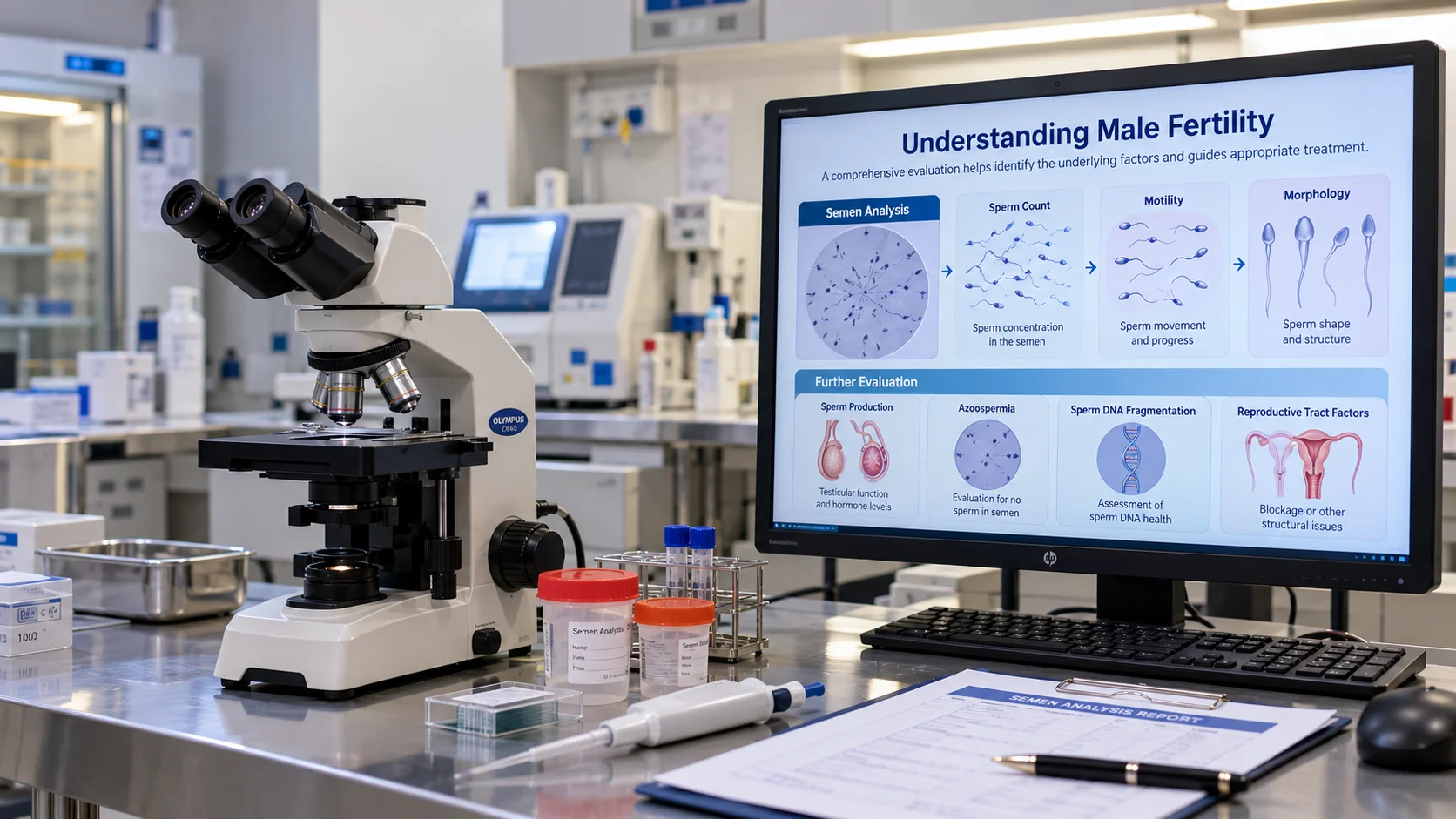
Male infertility rarely has one single cause, and it isn’t always obvious from a routine check-up. A focused evaluation, starting with a semen analysis, gives your doctor the first real clues about what might be going on and whether treatment is likely to help.
Common contributors include:
- Low sperm count or poor sperm motility
- Abnormal sperm shape (morphology)
- Impaired sperm production
- Azoospermia (no sperm detected in semen)
- Varicocele and other testicular conditions
- Hormonal or genetic factors
- Sperm DNA fragmentation
- Erectile dysfunction
- Premature ejaculation
- Blockages in the reproductive tract
- Past infections, injuries, or surgeries
No two men need the same treatment path. A specialist will interpret your results in context before recommending next steps.
Our Male Fertility Services
Azoospermia Evaluation
Azoospermia means no sperm was found in a semen sample. This happens for one of two broad reasons: the testicles aren’t producing sperm in sufficient numbers, or sperm is being produced but something is physically blocking its path into the ejaculate. Distinguishing between the two changes everything about male fertility treatment, so it’s usually the first thing we work out.
A typical assessment covers:
- Detailed medical and reproductive history
- Semen analysis (often repeated to confirm the finding)
- Hormonal bloodwork
- Physical examination
- Genetic testing, where indicated
- Further imaging or investigations based on initial results
Genetic Analysis
When sperm production is severely reduced or completely absent, chromosomal or genetic factors are sometimes at the root of it. If your evaluation points that way, your doctor may suggest genetic testing to look for conditions such as Y-chromosome microdeletions or karyotype abnormalities.
The results can explain a diagnosis, but they also help decide which treatment or sperm retrieval approach makes sense. Some findings carry implications for future children too, so this is information worth having before you start a family.
Genetic Counselling
A genetic test result can raise questions that go well beyond the lab report. Genetic counselling is where you and your partner sit down with someone trained to translate that data into plain language: what it means, whether follow-up testing makes sense, how it connects to your fertility options, and what to weigh before moving into treatment. Bring your questions. This session works best as a conversation, not a monologue.
TESA and Micro-TESE: Sperm Retrieval From Testicular Tissue
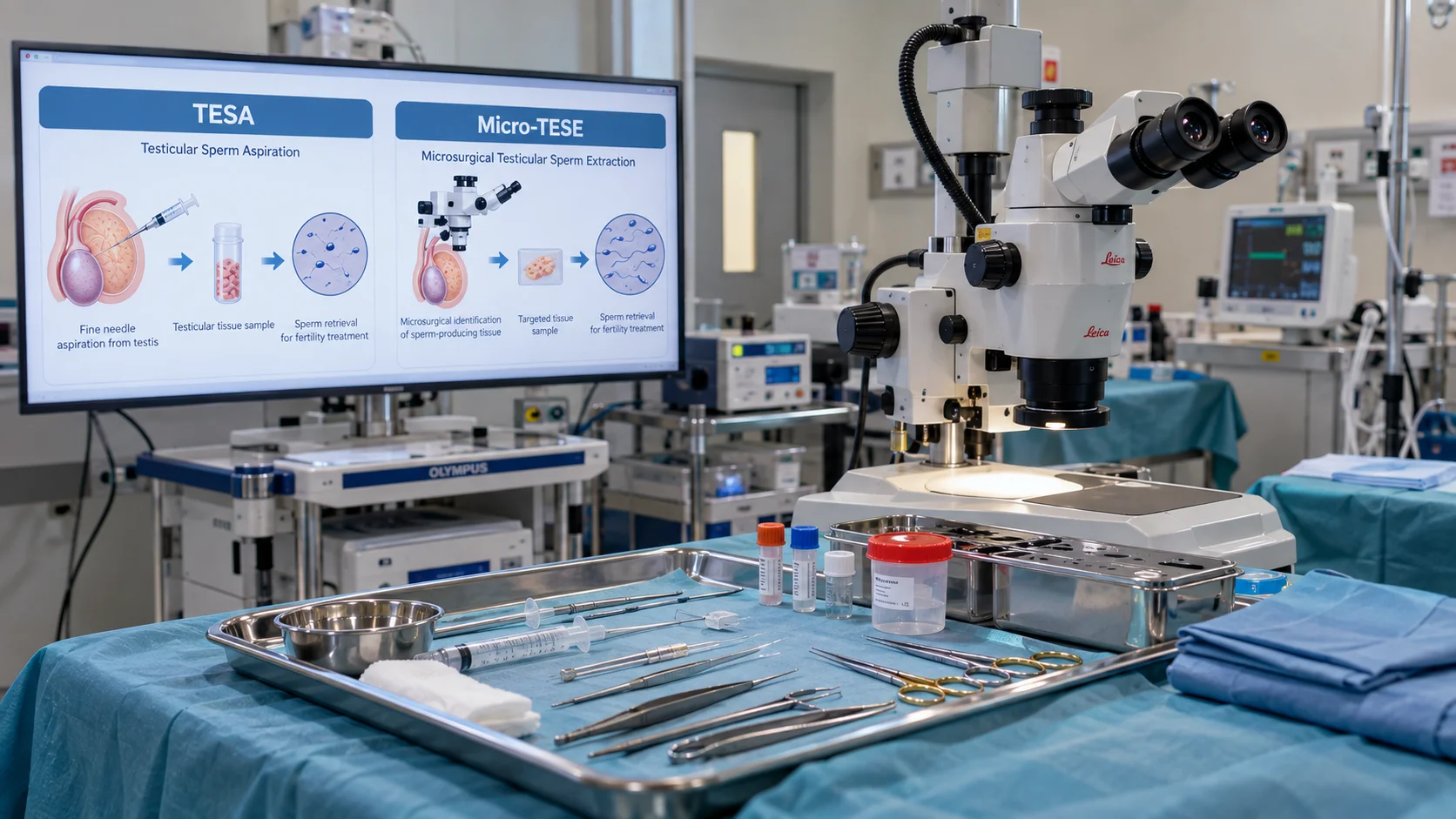
Even when no sperm shows up in the ejaculate, it may still exist within the testicular tissue itself. Two procedures can retrieve it directly.
- TESA (Testicular Sperm Aspiration) Uses a fine needle to draw a small sample of testicular tissue, usually under local anaesthesia. It's typically tried first when sperm production is thought to be reasonably intact but blocked from release.
- Micro-TESE (Microsurgical Testicular Sperm Extraction) Is a more involved microsurgical technique that uses an operating microscope to locate the small pockets of tissue most likely to contain sperm. It's generally reserved for men with severely impaired sperm production, where a standard needle approach is unlikely to succeed. Which one applies to you depends on the cause of azoospermia, prior test results, testicular function, any earlier fertility treatment, and how you and your partner plan to proceed with IVF or ICSI.
DNA Fragmentation Index (DFI) Testing
A normal sperm count and good motility don’t guarantee the DNA inside each sperm is intact. DFI testing measures the proportion of sperm carrying damaged genetic material, something a standard semen analysis doesn’t capture.
This test tends to come up in a few specific situations: unexplained infertility despite normal basic results, repeated IVF or IUI cycles that haven’t worked, recurrent miscarriage, or simply when a couple wants a fuller picture before committing to a treatment path. On its own, a DFI result rarely tells the whole story. We read it alongside your other fertility investigations rather than in isolation.
Microvaricocelectomy
A varicocele is an enlargement of veins in the scrotum, similar to varicose veins, and it’s one of the more common, correctable causes of reduced sperm quality. Not every varicocele needs surgery; many are small and don’t meaningfully affect fertility.
When surgery is the right call, microvaricocelectomy uses microsurgical magnification to precisely tie off the affected veins while preserving surrounding structures, lowering the risk of complications compared to older techniques. Your doctor will weigh the varicocele’s size and grade, your semen analysis, testicular function, any symptoms, and your overall fertility timeline before recommending it.
Erectile Dysfunction Treatment
Erectile dysfunction affects a couple’s ability to conceive through intercourse, which makes it a real fertility concern rather than a separate issue to manage on the side. Causes range from vascular and hormonal to psychological and medication-related, and often it’s a mix.
Your doctor will talk through your symptoms and history openly, then work out whether further testing or a specific male fertility treatment fits your circumstances, always with your fertility goals in view.
Premature Ejaculation Treatment
Premature ejaculation can complicate timed intercourse during a fertility window, on top of its effect on sexual wellbeing more broadly. It’s a common concern and one you can raise without discomfort. Our team discusses it as routinely as any other fertility factor.
Your doctor will look at your symptoms, sexual and reproductive history, and any related health conditions before suggesting a path forward, and will flag if a referral to a specialist would help. The one thing we’d steer you away from is self-treating based on forums or supplements. A short conversation usually opens up options people didn’t know existed.
PESA: Percutaneous Epididymal Sperm Aspiration
PESA retrieves sperm directly from the epididymis (the coiled tube that stores and transports sperm) using a fine needle, without open surgery. It’s an option for men whose sperm production looks normal but who have a blockage, often from a prior vasectomy, infection, or congenital absence of the vas deferens, preventing sperm from reaching the ejaculate.
As with TESA and Micro-TESE, we confirm the likely cause of infertility first, since that determines whether PESA is actually the right retrieval method for you.
How We Approach Male Fertility Treatment
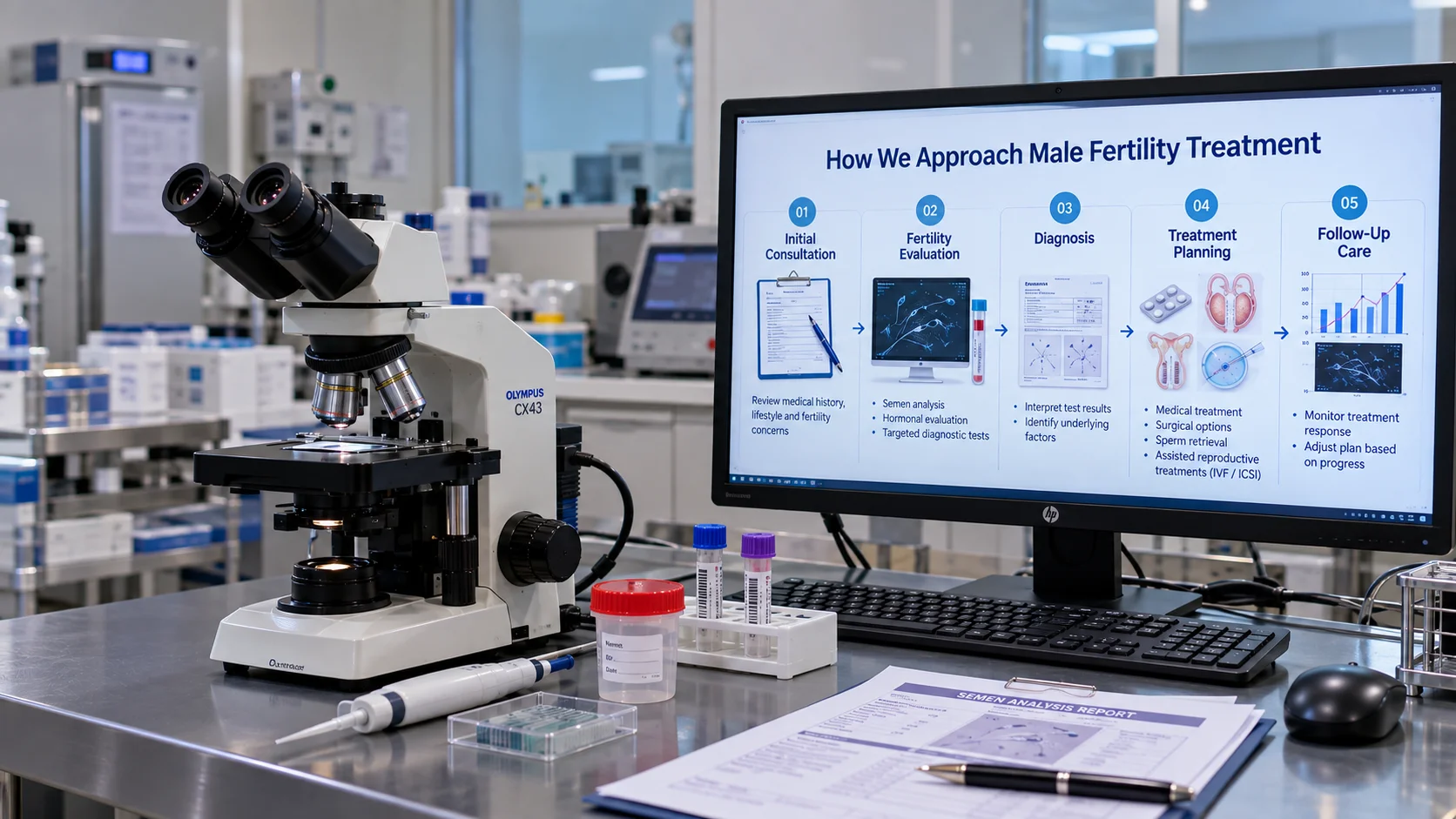
There’s no single male fertility treatment that fits everyone. The right plan depends on the underlying cause, your test results, your history, and what you and your partner are working toward. Here’s what the process usually looks like:
- Initial Consultation We talk through your concerns, medical history, lifestyle, prior treatments, and goals.
- Fertility Evaluation Targeted tests are ordered based on what your history suggests, not a blanket panel.
- Diagnosis Your specialist reviews the results together with you to identify what's actually driving the issue.
- Treatment Planning We discuss medical, surgical, sperm retrieval, or assisted reproductive options, with the reasoning behind each one explained clearly.
- Follow-Up Care We track your progress and adjust the plan as needed rather than treating it as a one-time prescription.
Knowing why a treatment is recommended tends to make the process feel far less confusing. That’s the point of laying it out this way.
Male Fertility Supplements: Should You Take Them?
Antioxidants, zinc, CoQ10, and various fertility blends are heavily marketed to men trying to conceive, and some have modest evidence behind them for specific problems. None of that means a supplement should replace a proper evaluation, and some can interact with medications or mask what a semen analysis would otherwise reveal.
Before starting anything, talk to your doctor about your semen analysis results, any existing conditions, current medications, known nutritional gaps, past fertility treatments, and the exact ingredients in what you’re considering. That conversation is usually short, and it tells you whether the supplement actually fits your situation, or whether your money and effort would be better spent elsewhere.
Why Choose Tara Fertility Centre for Male Fertility Care?
Talking about male fertility isn’t always easy, and we try to make that part simple: confidential, respectful, and direct. We look at the person in front of us, not just a lab value on a page.
Here's what that looks like in practice:
- Evaluation built around your medical and reproductive history, not a generic checklist
- Confidential consultations for sensitive concerns
- Testing ordered when it's clinically useful, not by default
- Advanced sperm retrieval: TESA, Micro-TESE, and PESA
- Genetic evaluation and counselling when relevant
- Microsurgical treatment for conditions like varicocele
- Full coordination with assisted reproductive treatment (IUI, IVF, ICSI) when needed
- Clear, direct communication at every stage
As a dedicated male fertility centre, our aim is a clear path from evaluation to treatment, with you informed at each step, not just at the end.
Our Doctors


When Should You See a Men's Reproductive Doctor?
You don’t need to wait a full year of trying before getting checked. Earlier is often better. Book a consultation if:
- You and your partner haven't conceived after several months of trying
- A previous semen analysis came back abnormal
- You've been diagnosed with azoospermia
- You have a known or suspected varicocele
- You've had a testicular injury or prior reproductive surgery
- You're concerned about sperm production generally
- Erectile dysfunction or premature ejaculation is affecting your ability to conceive
Getting evaluated early doesn’t commit you to anything. It just gives you real information instead of guesswork.
Frequently Asked Questions
Take the Next Step Towards Parenthood
Male fertility concerns don’t have one cause or one fix, but identifying what’s actually going on is what makes male fertility treatment effective instead of a guessing game. At Tara Fertility Centre, we cover the full range: evaluation, genetic testing, sperm retrieval, and surgical treatment, all under one roof.
If sperm health, azoospermia, sexual function, or unexplained difficulty conceiving is on your mind, talk to our fertility team about your options.